

“Vape shops. Betting shops. Dodgy businesses.
If you look at your high street these days and think ‘who asked for this?’, you’re not alone.
I’m doing something about it. We’re giving local people and councils more control over what opens, and tougher powers to crack down on businesses that aren’t good for our communities.
For too long, Westminster has stood by while our high streets declined. That ends now.”
Britain’s Prime Minister, back from the seaside, has launched his grand summer tour by announcing plans to “Save the High Street”. A carefully coordinated plan to deal with the scourge of vape shops, betting shops and dark places filled with slot machines. A scourge that is destroying that most precious of English things: the high street. Andy Burnham is going to do this by giving powers for local councils to ban and block the sorts of shops that you don’t like. Vape shops with garish pink neon signs: gone. Betting shops filled with sad people poking at betting machines or sat forlornly staring at some greyhounds on a TV screen: gone. The ‘Adult Gaming Centre’ with subdued lighting, bad carpets and rows on one-armed bandits: gone. It isn’t in the PM’s message but I assume that all the Turkish barbers with big chairs plus one like a racing car for kids to sit in while their hair’s trimmed will be gone.
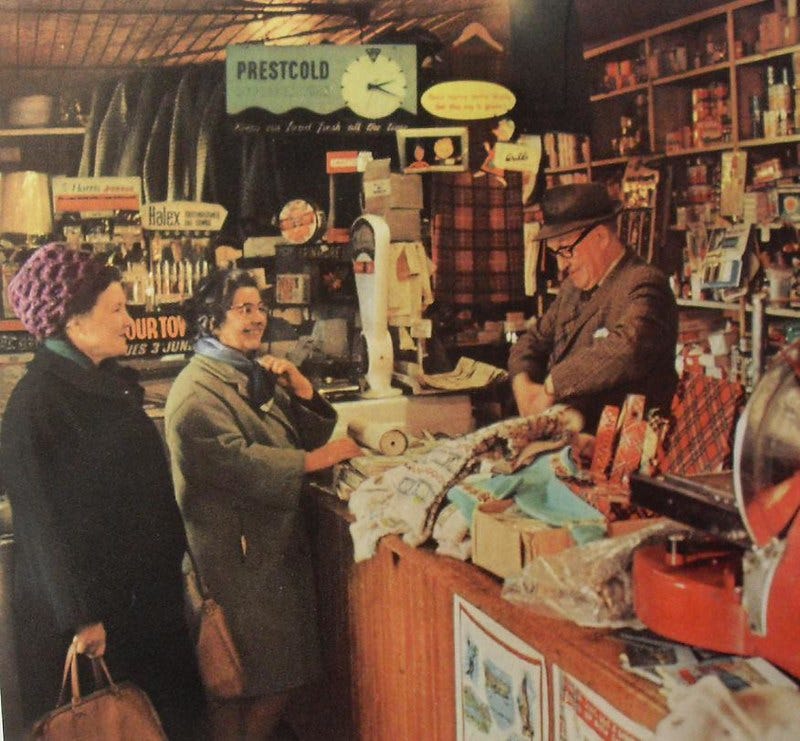
Just a few innocent tweaks to planning regulations, inventing a new Use Class that’s essentially “shops that councillors think people don’t like”. With this single act of genius, Andy Burnham has saved the high street. Never again will the scourge of ‘dodgy businesses’ plague our precious town centres. Little old ladies window shopping in the old Hoagy Carmichael song return safe now that there won’t be any vape shops. Solid housewives with Silver Cross prams will gossip outside the greengrocers while, on a Saturday, their hard-working husbands will discuss power tools and screw sizes with Albert in the hardware store. What young people there are, can be found staring at the display of model railways, die cast cars and dolls in the general stores. Everywhere is clean, tidy, unbroken and respectful. Bernard Drake, President of the newly vibrant Chamber of Trade is heard to say how much better it is and “all because of Mr Burnham, what a fine leader he is”.
We can say safely that none of this is going to happen. Andy Burnham announcing that councils can ban vape shops isn’t going to save the high street. I know you are all shocked to hear this but the decline in our town centres and high streets has almost nothing to do with vaping, gambling or the need for black marketeers and criminals to launder their ill-gotten gains through strangely empty barber shops, nail parlours and mobile repair businesses. The decline of Britain’s traditional shopping places is down to us. We did it.
The same people who tell you it is because of parking charges, crime, litter, and unpleasantly garish shop fronts were, yesterday, sat in their kitchen ordering hardware, clothing, shoes, toys, and household goods using their mobile phone and a credit card. Earlier those same people had driven to the supermarket where they purchased a week’s worth of groceries, some clothes for the grandkids and a lovely vase for the sister’s birthday. Last weekend, these same people drove 20 miles to look at some new furniture for the kitchen where they ordered the rest of their shopping. Don’t blame the death of the high street on dodgy businesses moving into the gaps made from businesses that closed because of supermarkets, big box stores and online shopping. You hold in your hand, you might be using it to read this, the gun that killed the high street. And it is smoking.
If Andy Burnham wants to save the high street, perhaps start somewhere else. Rather than listen to Hyacinth Bucket wannabes and other assorted fussbuckets, worrywarts and busibodies, he should maybe listen to people like Vaughan Allen, chief executive of Manchester’s Business Improvement District:
“Or you could, you know, reduce business taxes, reduce employment taxes, scrap planning powers and let the market do its job.”
Even these changes, welcome though they’d be, won’t put an end to the high streets decline because that’s driven by our behaviour, our choices, not but regulations, taxes and rules. If we want to understand what’s necessary to save the high street, then we need to start with the town centres and high streets that are thriving and ask why that is. There’s a great piece of ethnographic research from Susie Prior and Sandford Grossbart (2005) in a thriving American small town that observed:
“Other consumers and retailers describe social activities on Main Street, which they associate with a variety of experiences, including dining; window shopping; strolling for relaxation; jogging for health reasons; pub crawls; wine tastings; book clubs; language clubs; craft guilds; charity events; art events; parades; demonstrations; mass celebrations following major sports victories; and meeting friends. Many informants also refer to social interactions between and among retailers and consumers.”
Town centres need impresarios as much as they need managers. But the thing that connects these activities in small town America is that they are the activities we associate with the better off, even the wealthy, and especially with the older variants of these people. Successful high streets are places where there are lots of people with time and money. Sometimes this is, as you’ll see in Haworth and Saltaire near me, a function of tourism but more usually it is like Ilkley or Boston Spa, where the people nearby are wealthy and retired or semi-retired.
If you want thriving high streets and town centres, you don’t achieve it by giving councillors more powers to stop things and ban things, you start with economic growth, with a stronger local economy. And you then do the sorts of things Vaughan Allen does in Manchester: cleaner streets, attractive street environments, control of anti-social behaviour and working every day to improve a place’s image. But, as I wrote in 2023:
“The solution stares us in the face - economic growth - but nobody seems to have any desire to help make that growth real. Unless there’s maybe 20-30% more disposable income in places like Keighley, Oldham or Wolverhampton there is little prospect of getting a thriving town centre. Making those places look nicer, getting a few more community facilities maybe, will merely give the illusion of betterment rather than actually making these places better.”
If, urged on by Andy Burnham, councils get rid of vape shops, ‘Turkish’ barbers and betting shops, they won’t be replaced by bijou cafes, boho clothing stores and smart wine bars. What you’ll get is more boarded up shops: here’s lottery funder Power to Change:
“A record 16% of shops on Britain’s high streets stand empty and one in every 20 vacant units across the country have been shuttered up for more than three years.”
Doing what Burnham proposes will simply get you more empty shops because the reason why all those old time uses have gone is because people don’t have the money to pay the premium for buying in a high street and, let’s face it, buying online is most of the time a load easier and quicker.
Hoagy’s little old lady sits in our memory as an image of something lost. We’d like it back, that bustling town square filled with happy, smiling shoppers and strollers. But we’d like it back without us giving up buying on our phone and loading up the car with groceries at the supermarket. It isn’t coming back, just enjoy the song.
“A little bit of business here
A little bit of business there
Bet that you’ve been window shopping
All around the square
Little old lady, time for tea
Here’s a kiss, two or three
You’re just like that little old lady
I hold dear to me”
“Or you could, you know, reduce business taxes, reduce employment taxes, scrap planning powers and let the market do its job.” If only.
Cynically I assume that all this guff is just trying to create warm fuzzy feelings in the electorate ahead of an autumn election.
Burnham may not be the brightest spark but he can’t be so stupid as to think he will magic a John Major style 1950s fantasy back into existence.
Oh, and if there is, for the sake of the argument, illegal activity going on behind the scenes in many of these cash based ‘businesses’, then we could go in for a bit of robust law enforcement rather than allowing councillors to indulge their personal preferences on high street occupants.