

“Our Right Homes, Right Place, Right Price Charter will simultaneously protect valuable green space for communities, reduce climate emissions, tackle fuel poverty and provide genuinely affordable housing.”
This is the opening of the Green Party policy on housing. It is, as you can see, a miracle. Every single vexed circle is happily squared. At the heart of the policy is the building of 150,000 new social homes per year (although if you read the policy the number is met by new build and…”purchase/refurbishment of older housing stock”, so not actual new houses). And, while the Green Party proposals won’t even scratch the surface of Britain’s housing problems, their focus on ‘affordable social housing’ places them firmly in the mainstream of housing opinion. With one or two exceptions, every political solution offered by every political party expects that a large proportion of new housing will be social or council housing.
All local authorities have provision (an expectation of national policy as set out in the National Planning Policy Framework, NPPF) for affordable housing on all developments of more than 10 homes. Changes to the NPPF in 2025 led to a greater emphasis on social housing rather than simply ‘affordable’ housing. For developments on new green belt releases the NPPF now expects 50% of the new-build homes to be social housing where rents will “remain at an affordable price for future eligible households…”. The principle arguments for more social housing are Shelter’s claim that there are 1.3 million households on social housing waiting lists and the more pragmatic observation that more people in social rather than private rented accommodation reduces the cost of housing benefit. The case for council housing, however, rests on one huge presumption and one enormous myth.
The presumption about the need for council housing is that a large part of the population will never be able to afford to buy a house or afford a market rent, so therefore the state must build and/or subsidise housing for these people. Around 17% of English housing is social rented which is down from its peak in 1980 of around 31%. Those making the case for council housing argue that this decline in social rent merely resulted in a bigger private rented sector and, of course, the evil profiteering of landlords. But when we look at the effect of right-to-buy this clearly isn’t the case. The majority of right-to-buy sales occurred between 1980 and 1990 (about 1.5 million homes) but despite this drop in social housing numbers, in 1992 the private rented sector was at its lowest level in history. The shift, as the policy intended, was from social rented to owner occupation. The rise in private renting wasn’t driven by the decline in social housing numbers but by increasingly unaffordable market housing, especially in London and the South East of England. The only reason we have such a large number of people, chiefly young professionals, who cannot afford to buy a house is because we haven’t built enough new homes where housing demand is highest.
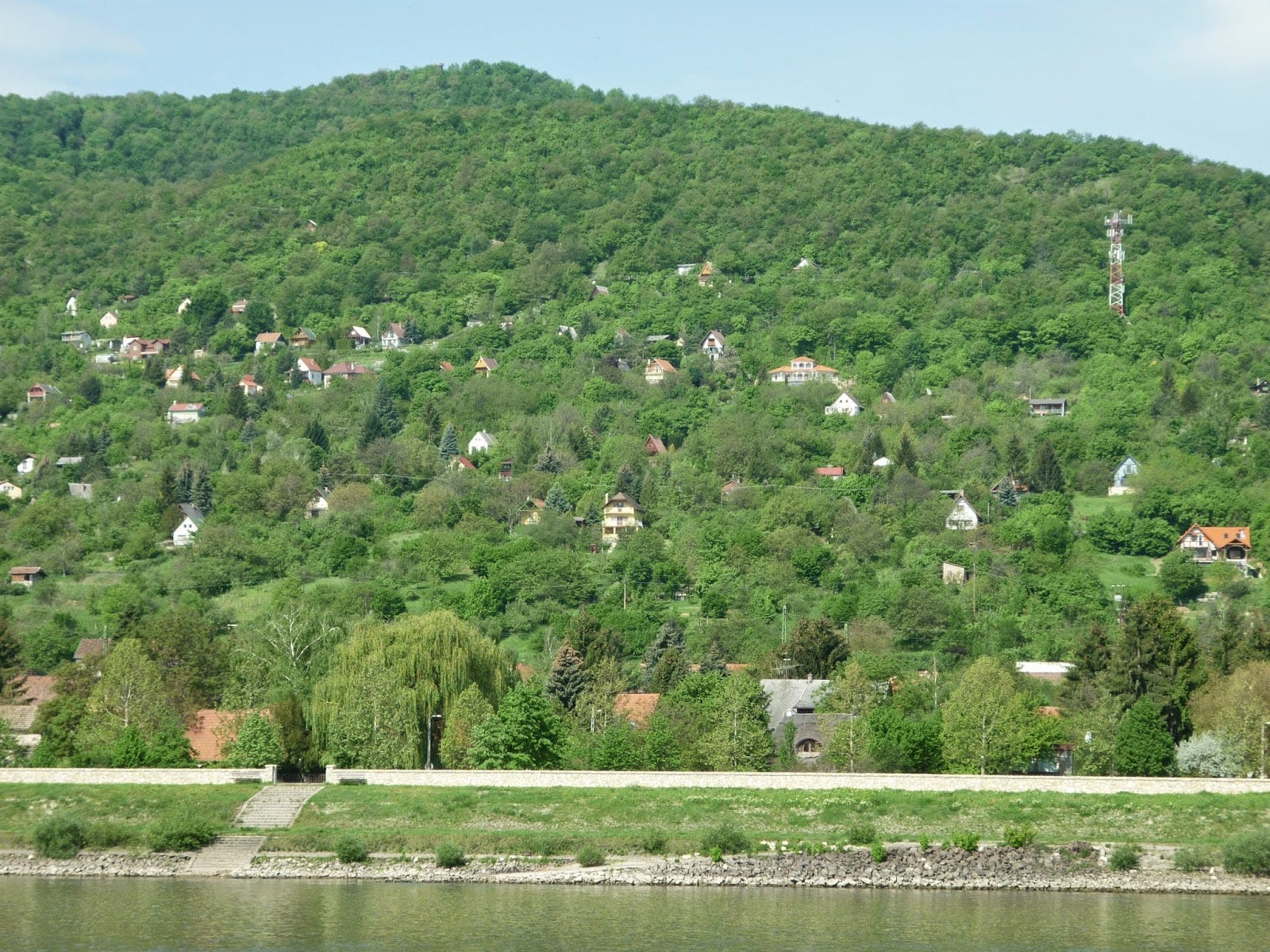
In Romania and Slovakia, home ownership levels exceed 90%. There may be factors helping this process (declining populations, for example) but the principal reason is pretty simple. There are more than enough houses to meet the need for housing. And, in broad terms, people are able to build houses on land that they own. If you travel along the Danube from Vienna to Bratislava there’s a steep sided section where one side of the river is in Austria and the other in Slovakia. Both sides are heavily wooded but, on the Slovakian side, with a more liberal approach to development, there are new homes dotted across the slope, each built to capture the river view. On the Austrian side, with strict planning controls there are no new homes. Nearly everywhere the level of house prices and rents reflects the extent to which the state has sought to control where and what can be built, often resulting (as in England) in the banning of almost all development in areas of greatest housing pressure.
In England, we used not to have a situation where 40% of households couldn’t afford to buy a house. The reason we have this today is entirely the consequence of two policies: the tightening of planning restrictions after 1997 leading to a boom in house prices, and the accompanying relaxation in immigration controls leading to additional housing pressure. But even if we didn’t tighten immigration controls, allowing development keeps rents down and ensures more people can afford to buy. If your response to these housing challenges is to build council housing, all you do is trap people into a tenure they don’t want (and one with a history of poor management). Young aspirational professionals in London want to do what their parents did, buy a house, yet are now being told that this is impossible.
Which brings us to one of the biggest myths about housing in Britain, the post-war boom in housing. This boom, we’re told, was made possible because the state built council housing. Harold Macmillan’s programmes from the 1950s and the slum clearances of the 1960s are held up as evidence that private developers cannot meet housing needs, only the state can do this. The problem is that, when we look at the evidence, it turns out that the private sector not only can meet housing demand, it can do so at a scale and pace far in excess of what the state can achieve. The 1930s in England (and despite economic challenges, the inter-war period in general) saw numbers of new homes developed at record levels as 70,000 building companies competed to build what became the nation’s suburbs.
Why (other than the interruption of the war) did all this stop? The answer is again quite simple. The sort of people who like planning finally got a government - Attlee’s Labour government of 1945-1950 - that liked central planning. Men like Patrick Abercrombie from the CPRE and a bundle of architectural experts hated the unplanned nature of suburban development and what they pejoratively called sprawl. So we got the 1947 Town & Country Planning Act, the green belt and the de facto nationalising of rights to develop. Under such a system, the only way to develop at scale was to do so via the state, either through new towns or the development of council estates. But even with enormous funding and encouragement from the ministry, Britain didn’t get to the levels of housing development delivered by the private sector in the mid-1930s.
Council housing didn’t work. It is true that it got Britain a short term fix of housing supply but did this at the expense of housing choice, quality and the trapping of millions into a dependent tenure they didn’t like. The first proposals for a right-to-buy came, not from radical free market Tories but from the Labour Party in 1959. It was seen that, as wages for the working classes rose, finding them a way to join the ranks of the owner occupier was a vote winner. And why should the state provide millions of homes with subsidised rents when workers could afford a real stake in Britain by buying a home?
To make matters worse, in a time of high inflation councils found themselves trapped between the desire to keep rents down and the need to fund the management and maintenance of their houses. Even without that inflation, councils couldn’t afford to upgrade homes. In some places the legacy of corrupt development procurement added to the problems for councils as shoddy building work, especially in system built blocks of flats, piled costs onto housing management. While not all council housing was poorly maintained and badly managed, too much of the post-war social housing stock and especially flatted developments proved to be difficult to let and expensive to maintain. Central government through estate renewal schemes, regeneration programmes and de facto debt relief for councils acted to patch over the problem but there was no way in which many councils and other social housing managers could sustain estates filled with poor-quality and unpopular housing.
Requiring new housing development to be 50% social housing may sound good but, especially if like the Green Party (and too many in the social housing sector itself to be fair) you oppose right-to-buy, what happens is you lock in the idea that young professionals in successful cities can only thrive if the state subsidises their housing. And that, unless they are incredibly financially successful, these clever, well-educated and ambitious young people will never be able to do what their mums and dads did and buy a house. Housing policies of mass council house building without the exit ramp of right-to-buy represent a simple admission of defeat. Even worse, the allocation of half the available development land to loss-making (and often value-destroying) rent-controlled social homes simply drives up the levels of private rents and house prices.
In London boroughs like Islington, Newham and Camden between a third and two-fifths of housing is social housing. These boroughs all have significant waiting lists for this subsidised housing, very high private rents and, despite the best efforts of regulators to make some housing unsaleable, wholly unaffordable property prices. When the London mayor, Sadiq Khan and other Labour or Green Party politicians argue for rent controls, they never mention that up to 40% of homes in central London are already rent-controlled. Maybe this is because this simple fact undermines their argument by demonstrating that rent controls simply result in homelessness, higher rents and general housing misery.
If we want a liberal, equitable and ambitious housing policy then it should start with the aspiration for England to have the same levels of homeownership as Slovakia, Hungary or Romania. Instead of a policy of building densely packed state-controlled tenements, we need a policy that, over all but the most precious places, people who own land are allowed to build houses on that land. And that what they build on that land is down to them not down to regulators or politicians. This doesn’t, of course, stop councils from buying land and building houses for rent but it does shift the development onus from the state to the private sector. And we know from the suburban development in the 1930s (and, indeed, today’s suburban development in places like Austin, Texas) that the private sector can deliver so long as you don’t place too many barriers in their way.
Britain’s social housing system is terrible: rents set by a national regulator, estates only maintained through periodic grant funding, and development only possible through taxing developers or subsidising building costs. Social housing operators maintain asset management programmes with funding stretched over 30 years or more and still struggle to fund managed works or active housing management. Illegal sub-letting, overcrowding and antisocial behaviour is rife with housing staff unable to operate safely. As always, this isn’t everywhere. There are many good and effective council and social housing operators but even the best are, in effect, holding up a collapsing edifice.
In the 1980s the aim of British housing policy was to create a nation of homeowners. Not to abolish council housing but to make it unnecessary, at least in meeting the general housing needs of the population. Between the foolishness of national policy-makers, the selfishness of existing homeowners and increases in immigration, Britain created a situation where having a property-owning democracy feels like an impossible dream. So impossible that some argue owning property is some sort of sin and others propose that the only way to affordable housing is smaller homes, rented homes and a state-controlled system of allocation, management and pricing.
But this is a lie. We can have a country where people can realistically aspire to having a real, physical stake in their nation, more than Dick Gaughan’s ‘one handful of earth’. We nearly did but politics, socialism, selfishness and stupidity raised their heads meaning that now 40% of households - over 60% in our capital city - are trapped in the curse of renting because rich snobs didn’t like sprawl, and their successors voted for higher house prices not homes for the next generation. If you want to change this, you don’t need council houses, you don’t need rent controls, you don’t need national housing regulators, you don’t need new regulations on renting or leasehold, you don’t need complicated schemes of land value capture (or theft as I prefer to call it). All you need to do is let people build houses on land that they own. Just that.
‘Affordable housing’. Your house subsidised by the labour of others. Making houses less affordable for all.
I have never understood something about Margaret Thatcher's 'Right to Buy' policy. Many people complain that this reduced public housing, which of course it did. But the people who would have been living in public housing now had their own house, which most people agree is a good thing. Surely having everyone own their own home would be the ideal. So which was it? Was 'Right to Buy' a good or bad policy?