

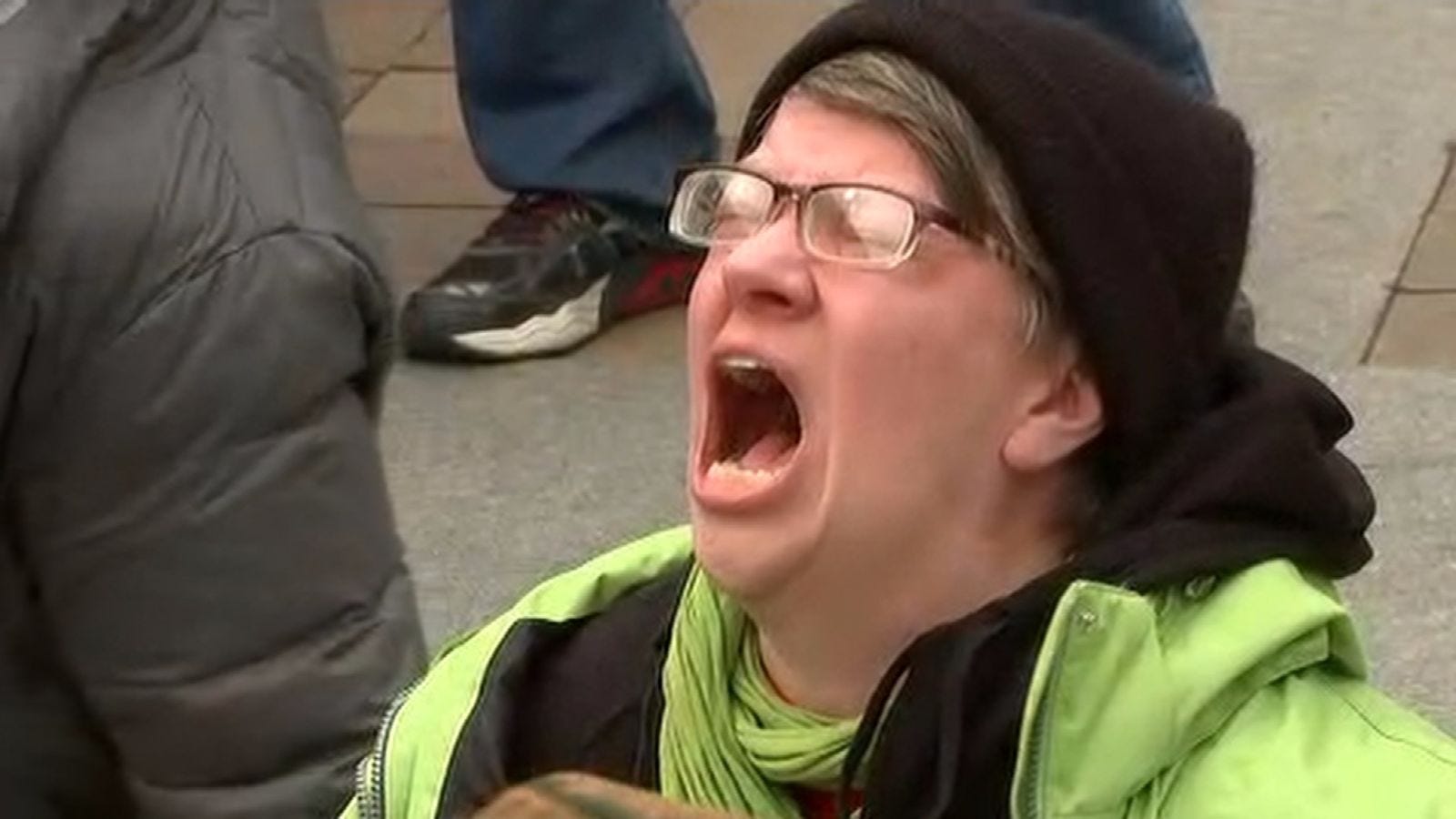
“As I'd seen over and again, people who see themselves as victims sometimes don't notice when they become oppressors.” Souad Mekhennet
Some while ago somebody, I don’t know who, invented the idea of shared victimhood. That simply being within a given group made you a victim. Your actual lived experience didn’t matter, the fancy car on your drive didn’t matter and the size of your paycheck didn’t matter. All that mattered was that you were of that group, that you could claim victimhood because of your blackness, gayness, disabledness or femaleness. And being in a group entitled to victimhood granted not only protection from criticism but also access to the quota-filling, target-meeting world of corporate and public sector equalities policy. You might be a victim but you were, if you knew which buttons to press, a privileged victim.
But if you’re a multi-millionaire football star or a successful tech innovator or a celebrated actress you aren’t a victim. Nothing in your life tells anyone that you’re a victim. But if you’re black or gay or trans or disabled you can vicariously share the victimhood of others with that characteristic who probably are victims. And everyone wants to join the game, the way to give yourself advantage is to be a victim, to find out (surprisingly) you’re neurodiverse, to fit neatly into the victimhood holes of the company’s diversity plans.
Meanwhile the political world, so attuned to grievance as it is, discovers these victims. Not real people with actual problems (unless they fit a political campaign) but groups of victims - assorted ethnic and religious minorities, the bewildering acronymic world of LGBetc and a veritable forest of disabilities, some almost invisible to all but the most victim-sensitive eyes. Policies, programmes and strategies are formed, whole teams of sensitive officials are appointed, the priorities of group victimhood are embedded in personnel, recruitment, grievance and discipline policies. You must be sensitive to the concerns of these groups, says the policy.
And the people with nice cars on the drive, university degrees and the right victimhood gain preferment. There really are victims out there, poor kids, disabled kids and such. But the gains from victimhood don’t go to them. Instead they go to connected, educated, dare it be said, posh folk who played the right victim card.
I’m not a victim. I’m straight, white, English, and haven’t got a ‘tism or a physical disability. But I understand why people wanting to scrabble up the challenging ladder of life seek out what advantages there are to help that process. And being a victim is one of those advantages. Not an actual victim obviously because being a well educated, university qualified person doesn’t give off the gentle perfume of victimhood. But if you can press a victim button - race, sexual preference, neurodiversity, mental health - then the route to advancement is smoother. It may be annoying watching a multi-millionaire Hollywood star talking about their struggle with ADHD, dyslexia or being gay, but this is what feeds the need for victimhood.
Now, because we have filled people’s minds with the advantages of victimhood, those who can’t lay claim to that victimhood are seeking to broaden the definition. I’m reminded of Michael Wharton’s ‘Peter Simple’ and his radical psychologist, Heinz Kiosk who, as his peroration proceeded, would build to a crescendo of “we are all guilty” as the audience headed for safety beyond the lecture theatre.
Victims are individual, yet we have created a world where being a victim is collective, institutional and shared. The black drug addict dying on the streets of Minneapolis is a victim, as is the white student stabbed in Southampton. But they are individual victims and don’t make others of their race and culture also victims. Our problem is that people want to make one or other death into a validation of victimhood, into a scream of anger directed at authorities and as an appeal to that victimhood.
You’re not a victim though are you? White people, black people, gay people and disabled people aren’t victims. You may be individually a victim of something - prejudice, dismissal or even worse - but this, even if your group membership is the reason, doesn’t make other people in that group also victims. This doesn’t negate saying prejudging someone on the basis of their characteristics is wrong. Passing laws or having organisational rules that make this prejudice punishable can be justified. Our problem is not the condemnation of racism, sexism or homophobia but the idea that the existence of prejudice merits special treatment for a whole group even if many in that group don’t experience damaging prejudice. We see this in action when the wealthy and successful comedian and actor, Sir Lenny Henry, calls for reparations, literally calling for all black people in Britain to be given a cash payment simply because a distant ancestor was a slave.
Britain has spent nearly 30 years embedding group victimhood into the rules governing institutions. From race relations and equalities legislation and through assorted guidance and ‘good practice’, we have arrived with the institutional norm being to assume that someone not in a particular victim group is prejudiced towards members of that group. And the only protection from these allegations is to be part of a different victim group. This results in a sort of victimhood top trumps and means that a homophobic or antisemitic Asian Muslim gets their prejudice treated differently from a homophobic or antisemitic person not from an identifiable victim group.
For politicians, and especially politicians on the left, these victim groups present excellent marketing opportunities since they all have identifiable leaders and figureheads. Each victim group has (often quite well funded) campaigning organisations and wealthy or powerful people who lay claim to one or other victimhood. In return for political support the victim groups get to shape laws and institutions in the interests of their particular group. Organisations and institutions permit groups to organise within them - black police associations, muslim civil service networks and so forth. This is ostensibly to provide solidarity for victims of the inevitable prejudice but, in reality, uses the threat from equalities rules to privilege the victim group. Organisations are risk averse and will almost always seek to avoid confrontation with somebody, backed by a network the organisation allowed to operate, playing their trump card of being a member of a victim group.
In this mad world of people seeking gain from victimhood it has become logical for people to want to be in a victim group (but preferably not an actual victim). This leads to fakery such as falsely claiming an ethnicity but also to people seeking victimhood for their group. One of the features of the populist and postliberal right is that they, like the left, stress group allegiance. Most usually this is an allegiance based on ethnicity or culture and the right has begun to craft its own grievance, to manufacture a victimhood. In this context we shouldn’t be surprised to hear Nigel Farage stressing the different treatment of white people because he - and others like him - have positioned themselves as leaders of a victim group of white people. The immediate reaction of the left’s pack of victim cards is to shout racism but this is a mistake because all it does is reinforce the sense of victimhood that Farage and the new right want to establish.
What is happening here is that grievance, real or manufactured, has become a significant currency in politics because we institutionalised victimhood as a feature of what became privileged groups. Advocates of this approach will, of course, argue that all this does is rebalance institutionally racist, sexist and homophobic environments. The quieter voices that object point out that the big winners in these systems aren’t people who actually face prejudice but rather those whose membership of a victim group provides advantage in preferment and protection from discipline. Such objectors point to people like Sir Lenny Henry and observe that he has, from being a teenager on New Faces to his role as the face of Red Nose Day, enjoyed nothing but the accolade of Britain and British people. Yet Henry still plays that victim card and media institutions buy the lie.
The murder of Henry Nowak has brought this to a head. Not because his murderer was a sikh but because his murderer (and that man’s family) played his victim card by claiming racism. Worse than this, the police on the scene seemed almost programmed to accept the allegation of racism without question. There is loud talk about ‘two tier policing’ and lots of references to George Floyd but the political exploitation of the tragic killing, rather than focusing on the failures in the police response, seems at times to be simply a search for white grievance, for a new victimhood. It is right to assert that the police will respond differently when a member of a victim group is involved because the guidance to police in England says just that. Whether this amounts to ‘two tier’ policing is open to debate and it is unhelpful for the Prime minister and others to simply dismiss the claim out of hand. But the appalling police response doesn’t turn other young white men in Southampton into victims or members of a victim group. When someone like Farage centres the word “white” in public comments that is what he is doing and it simply acts, for all its political impact for that politician’s supporters, to shore up the edifice of group victimhood that undermines the effectiveness of institutions in Britain.
We have in the noble cause of fairness and equality created a divided and divisive culture. Starmer accusing Farage of stirring up division is a really bad case of there being, as my Mum would say, most shoving where there’s least room. The systems that Sir Keir has had a big part in constructing, that game of equalities top trumps, created the problem we saw in Southampton. If we want things to change we cannot simply review Hampshire Police’s race policies or get the College of Policing to write a new interpretation of how police services should play the equalities game. To change we need to remove the superstructure - the presumptions about institutional racism, the Equalities Act that gave legal status to victim groups as victim groups, and the processes that see racism as a sort of original, overriding sin. I see Kemi Badenoch speaking of being ’colour blind’ but I have yet to see, from her or anyone, an approach to equalities that places this idea in a practical form. We need a route map away from our failed system of equalities top trumps towards a world where people really are judged by the content of their character. We can dream.
"most shoving where there’s least room" - that's a great phrase.
It's concern to me that a Conservative leaning commentator can still see merit in the Equality Act. You do not call for its repeal, maybe you have some special amendment in mind which preserves most of it.
A Reform leaning commentator would suggest actual Repeal, and let people be judged on the content of their character. I do think you are in a confused betwixt stage Councillor.
I must say that I like that you put Sir in front of Keir. Such fun to remind everyone that he accepted the honour.