

Marie Le Conte writes at length about Elon Musk who she considers a terrible, really terrible, person who is driving her insane. From the article, I gather that Ms Le Conte is French but lives and works in London. It is obviously Musk’s fault that Ms le Conte received, she tells us, some racial abuse on the social media platform he owns:
“This is why I’ve exploded here today, in a way that may seem undignified and will potentially lose me a few friends but I’m just so tired. I can’t bear to wake up every morning and look at my phone and my computer and feel like I’ve lost my mind. It’s torture. It’s torture! I’m not even that much of an idealist but I guess I assumed that people were better than they actually were, for most of my life, and that’s a horrible realisation to come to because I didn’t exactly think humanity was great to begin with.”
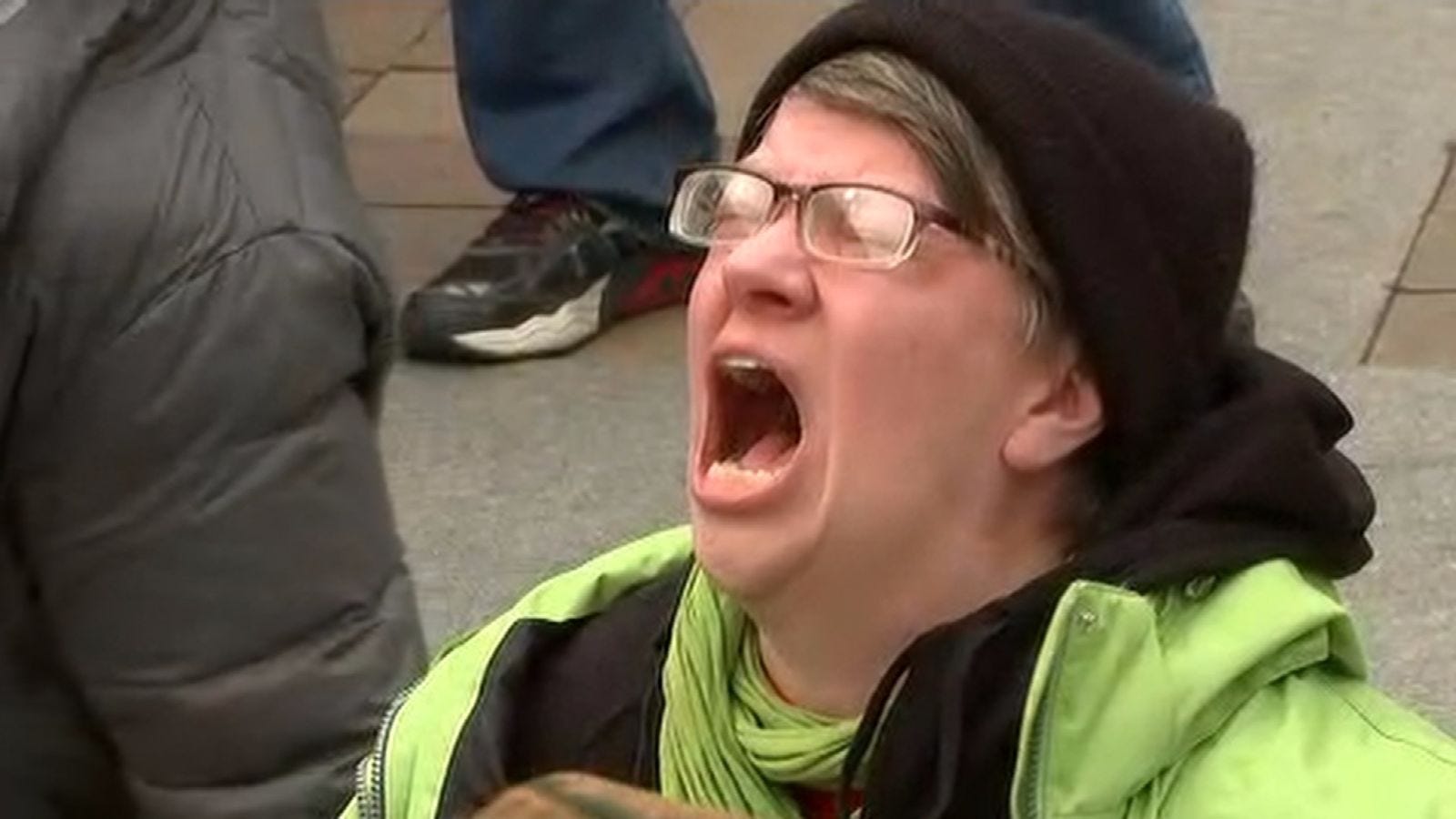
I don’t plan on speculating about the mental health of a random person on social media but to consider why it is that the politics of the USA is such a distinguishing obsession of the European centre-left. And how there’s a sort of phony mental breakdown shtick, first seen in the reactions of progressives to the first election of Donald Trump: screaming, hand-flapping, nose rings and coloured hair all performed too close to a mobile phone.
On the matter of Elon Musk, the benefit he has given to humanity by massively reducing the cost of getting into near space vastly outweighs any negatives (and I’m not sure there are so many of these in truth) from his ownership of ex-twitter. But, in the eyes of those tortured centre-lefty writers, Musk’s policies of allowing bad people to use his media platform (people like the actual elected president of the USA) amounts to a crime against humanity.
Those Sensible People who run the European Union seem to have read Ms Le Conte’s breakdown because they have done a similar, albeit more bureaucratic, mental breakdown mostly over ex-twitter’s ‘blue tick’:
“X’s use of the ‘blue checkmark’ for ‘verified accounts’ deceives users. This violates the DSA obligation for online platforms to prohibit deceptive design practices on their services. On X, anyone can pay to obtain the ‘verified’ status without the company meaningfully verifying who is behind the account, making it difficult for users to judge the authenticity of accounts and content they engage with. This deception exposes users to scams, including impersonation frauds, as well as other forms of manipulation by malicious actors. While the DSA does not mandate user verification, it clearly prohibits online platforms from falsely claiming that users have been verified, when no such verification took place.”
The EU continued its breakdown with nonsense about advertising and how ex-twitter doesn’t let them access the platform’s API so they can scrape it to search for stuff they don’t like (or “research” as the EU put it). The real reason for this fine, of course, is nothing to do with any of these things but, as the people at ex-twitter pointed out, that Elon Musk refused to censor or limit access to an interview on the platform with Donald Trump. The EU bureaucrats had literally attempted, in the run up to the 2024 US presidential election, to use its laws to try and intervene in those elections.
What we now have is the European Commission, the acme of centrist technocracy, actively trying to use its authority in the interests of the political opposition in the USA. While Trump’s administration has portrayed the Digital Services Act and the Digital Markets Act (the two principle tools being used by the Commission to suppress US social media platforms) as attacks on the US tech economy, we should be much more concerned that the leadership of the EU is this invested in trying to undermine the processes of democracy in the USA.
This last week the US government released a new National Security Strategy which, depending on who you read, is either an abandonment of shared security in Europe or else a continuation of Trump’s existing policy of pressuring European nations and the EU to take more responsibility for the continent’s defence. What is clear, however, is that Trump’s strategy refocuses the US on its own hemisphere rather than ours and seems also to return to the Obama era approach of positive engagement with China.
What’s also clear, however, is that Europe’s leaders will see the implicit (and, in parts, explicit) criticism of their security policies as unacceptable. And the response will be to double down on their endeavours to support the political opposition to Trump:
“This NSS is a real, painful, shocking wake-up call for Europe. It is a moment of cavernous divergence between Europe’s view of itself and Trump’s vision for Europe. If Europe had any doubt that the Trump administration is fully committed to a tough love strategy, it now knows for sure. The administration is asking—demanding, really—that Europe polices its own part of the world and, most importantly, pays for it itself. The most worrying parts of the strategy are the ones that chastise Europe for losing its European character. The sentiment behind the words seems to stoke fear of migrants and an adherence to an idealized, old-world Europe that is questionable at best. Modern Europe is vibrant, evolving, and—largely—pretty happy. The majority of Europe’s reaction to this NSS is likely to be the same aghast shock as met Vice President JD Vance’s Munich speech.”
We see in this characterisation (from the CSIS, a US think tank) two important presumptions: firstly that anti-migrant sentiment is fearful and, we should infer, ill-considered, and secondly that Europe is “vibrant, evolving and...happy”. Even for a Trump-sceptic like me, the document sums up Europe’s problem rather better than it presents a coherent security strategy for the USA. And, because Europe’s leaders are obsessed with Trump and Vance, they aren’t taking any time to consider why, especially in the Western half of the continent, electorates are so angry about migration, the economy and, increasingly, climate and energy policies. You don’t need to be a Trump fan to recognise that ‘stagnant, sclerotic and angry’ is a better characterisation of Europe.
The problem is that when European leaders, witness JD Vance’s Munich speech, are confronted over migration, free speech and the need to protect the continent’s cultures, the response from those leaders is little different to Marie Le Conte’s reaction to Elon Musk running ex-twitter. ‘How dare this jumped up hillbilly lecture us sophisticated urbane Europeans about democracy and security’ is accompanied by loud screams of indignation and allegations that Trump’s arguments (I think he is wrong about Russia-Ukraine but that Vance is right about speech, culture and immigration) are made in bad faith. Worse, those European leaders, echoing the screeching of progressives in the USA, go on to argue that the rise of what they call the ‘far-right’ isn’t due to domestic politics in EU nations but is a consequence of Trump and Musk. European politics is being infected by MAGA and this is the rationale for suppressing speech (or at least speech from the US right as encapsulated in ex-twitter). Meanwhile that ‘far right’ continues to grow despite most of the voters not only knowing nothing about MAGA but also entirely unaware that the US president has told EU leaders that the USA won’t be paying as much for European security in the future.
Some of Europe’s leaders recognise the problem the continent faces: slow, even negative, economic growth, rising levels of migration from the Middle East, South Asia and Africa, and a sense of social and cultural collapse. But the European Commission doesn’t contain any of those leaders, the European Parliament is a mess of fudge, corruption and phony concerns, and the national leaders on its council spend all their time looking over their shoulders to home where politics is getting mad, bad and dangerous. Trump is wrong about a lot of things (Ukraine, tariffs, power politics, dealmaking) but his instinct for politics remains: the public everywhere in Europe, just like the USA, are really bothered about immigration and their personal economic circumstances.
Marie Le Conte, at the end of her rant, rather sums up the EU leadership. Indeed she sums up the problem with the once dominant centrist technocracy of Merkel, Blair and Macron. The political centre is dying because it offers nothing beyond fearful prognostication and the sustaining of its own hegemony:
“That’s the crux of it, I think: I’ve just spent 2500 words hysterically going on about this or that but really? I have nothing to say. Nothing I say works. Nothing I say matters. Our world is stupid and hateful and it didn’t have to be this way but here we are. Fucking hell.”
Bit of a cheek for Le Conte to blame others for creating a hateful environment when it was the people she admires that did their best to create the necessary conditions. If it weren’t for the fact these same people are so out of touch and idiotic, one would think they were trying to create an experiment to see how far people can be pushed before they support a genuinely far right government.
I believe Musk is a genius. Tesla and SpaceX have made the world better. I was never a fan of ex-Twitter, but I don't think it is any worse now than it was before. But...
Musk's behaviour with DOGE was appalling. He hired a bunch of twenty-somethings and used his chainsaw to carve off the part of USAID that saves millions of lives. Then he quit in a huff because... well... why?
But that's not why this centre-lefty is concerned about Musk.
There are a bunch of almost-trillionaires who took a sudden interest in European politics over the last few years. Musk, in particular, seems interested in fixing the UK's problems. What happens when a trillionaire uses a billion or two to choose the party that he likes best? Do we have a way to stop that from happening? We had enough trouble stopping Putin from buying Welsh politicians. Can we stop American billionaires or Saudi sheikhs from buying all of them?
This isn't a complaint specifically about Musk, except that, of all the billionaires, he seems most interested in our laws and policies. Maybe I even agree with him on, say, free speech & immigration & overregulating the internet — but I still don't want him to be the one to fix them, because that will be the end of our democracy.
Also, I think it's reasonable for the EU to have an opinion on the relationship between Europe and America. Maybe it's true that European countries should spend more on defence, but what will happen if Putin decides he needs a bit more of Europe? Will America be interested in stopping him? Does NATO really exist any more? What does your average American think about that? Actually, what does your average congressman think? Has anyone asked them?
Would your average American prefer to be allies with Russia and the United Arab Emirates than with Europe? Who cares about democracy when there is money to be made?